The denim jeans truths nobody tells you in the fitting room
Because life is too short for jeans that gap at the waist, fade in the wash, or make you feel like a stranger in your own body.
Everyone knows the feeling: standing in a changing room under harsh fluorescent lights, slipping on a pair of jeans and thinking, “close enough.” Fast forward three months, and those jeans are crumpled at the back of your wardrobe after just one disappointing outing. Buying jeans seems straightforward, but it is actually one of the most failure-prone shopping missions out there. Here’s what most people get wrong—and how to fix it.
Common jeans-buying mistakes to avoid
1. Fit: Shopping by Size Number Alone
Denim sizing is a beautiful fiction. A “32” at one brand is a “34” at another. Vanity sizing, inconsistent manufacturing, and differing cut philosophies mean the number on the label is little more than a suggestion. Shoppers who refuse to try sizes up or down out of pride end up with jeans that fit the tag, not the body.
Fix it: Try at least two sizes. The number means nothing — the fit means everything.
2. Fabric: Ignoring the Stretch Content
Not all stretches are created equal. Jeans with 2–4% elastane give a gentle recovery and hold their shape beautifully. Jeans with 10–12% elastane might feel luxurious in the store, but will “grow” two sizes by noon, sagging at the knees and seat like a deflated balloon. Check the label before you buy.
Fix it: For slim and skinny cuts, aim for 1–4% elastane. For straight and wide-leg, go for 98–100% cotton for structure. The perfect pair of jeans should feel like they were made for your body — not like a dare your body is losing.
Some of my favourite jeans brands
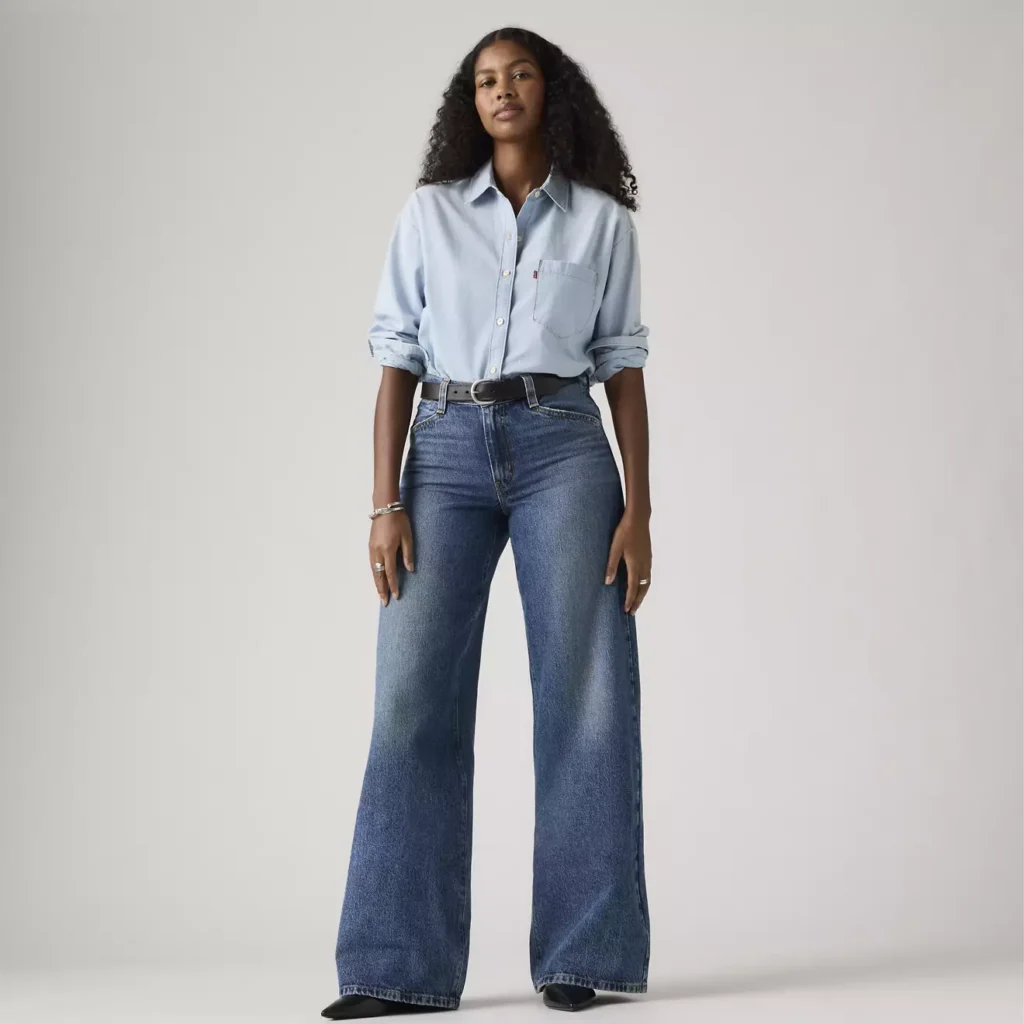
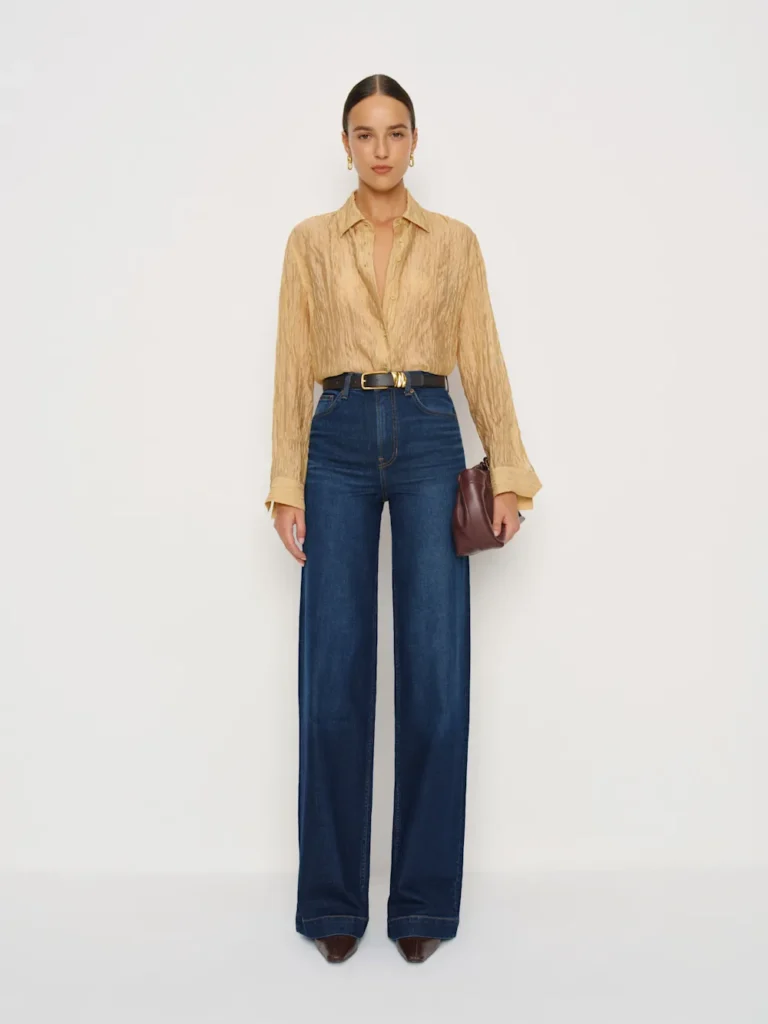
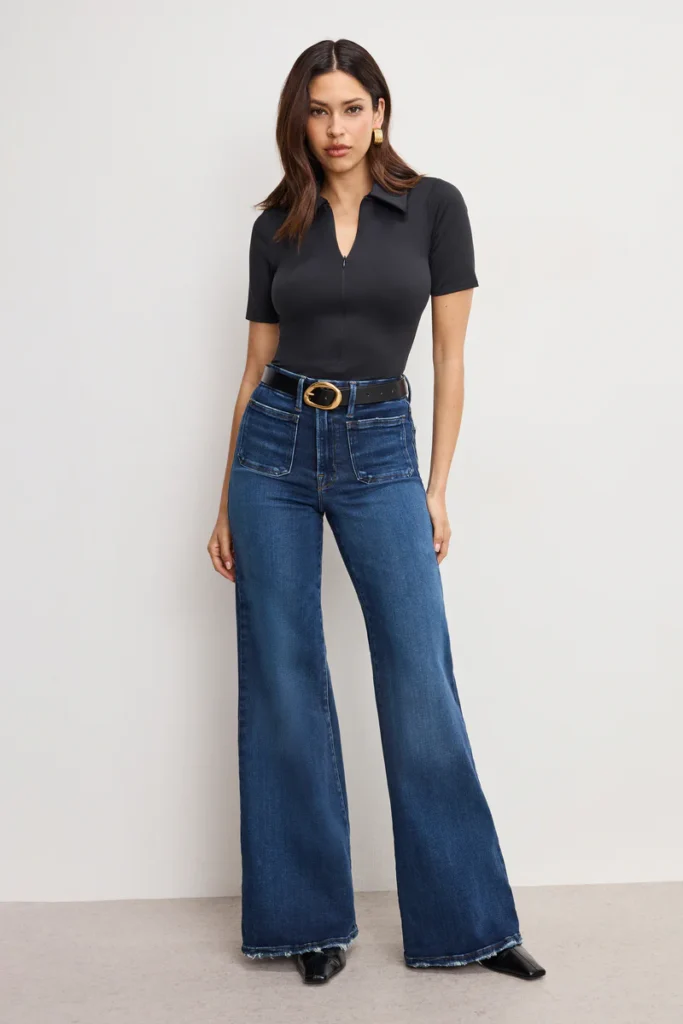
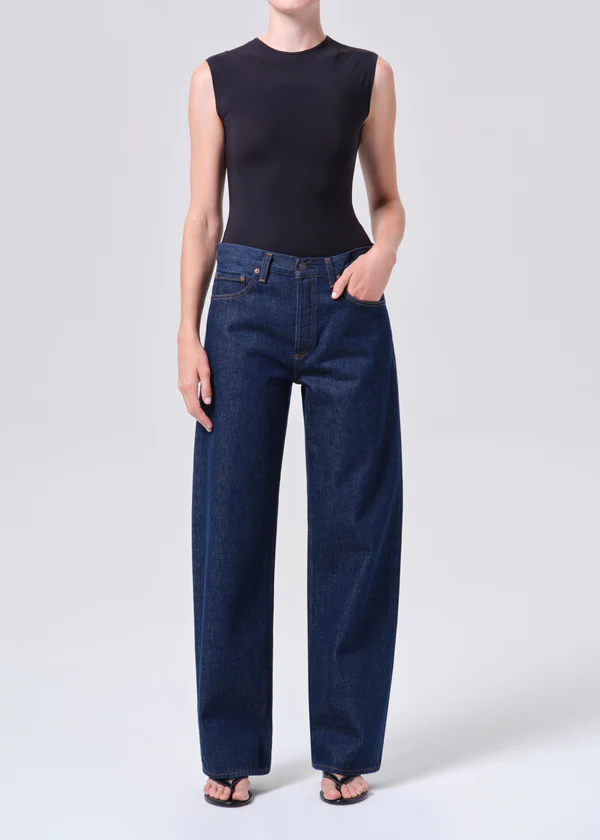
The perfect pair of jeans should feel like they were made for your body — not like a dare your body is losing.
3. Fit: Forgetting to Sit Down in the Fitting Room
We often judge jeans by how they look when we’re standing, even though they spend most of their life with us sitting in a chair. That waistband that fits perfectly while you stand can gap, dig, or roll once you sit down. So, always sit, squat, and climb an imaginary stair in the fitting room—your desk chair will thank you.
Fix it: The “sitting test” is non-negotiable. If you can’t slip a hand behind the waistband while seated, they’re too tight. If you can fit your whole fist, it’s too loose.
4. Wash: Chasing the In-Store Colour
Rich indigo, deep black, or stark white denim may look immaculate on the hanger—until you wash it. Denim that lacks a strong dye process or proper pre-treatment tends to fade, bleed, or yellow dramatically after just a few washes. Buying jeans for their colour is a poor investment if that colour won’t last, regardless of the price.
Fix it. Check for “colour-fast” or “pre-washed” on the label. Wash dark jeans inside-out in cold water — always.
5. Style: Buying a Trend Instead of a Shape
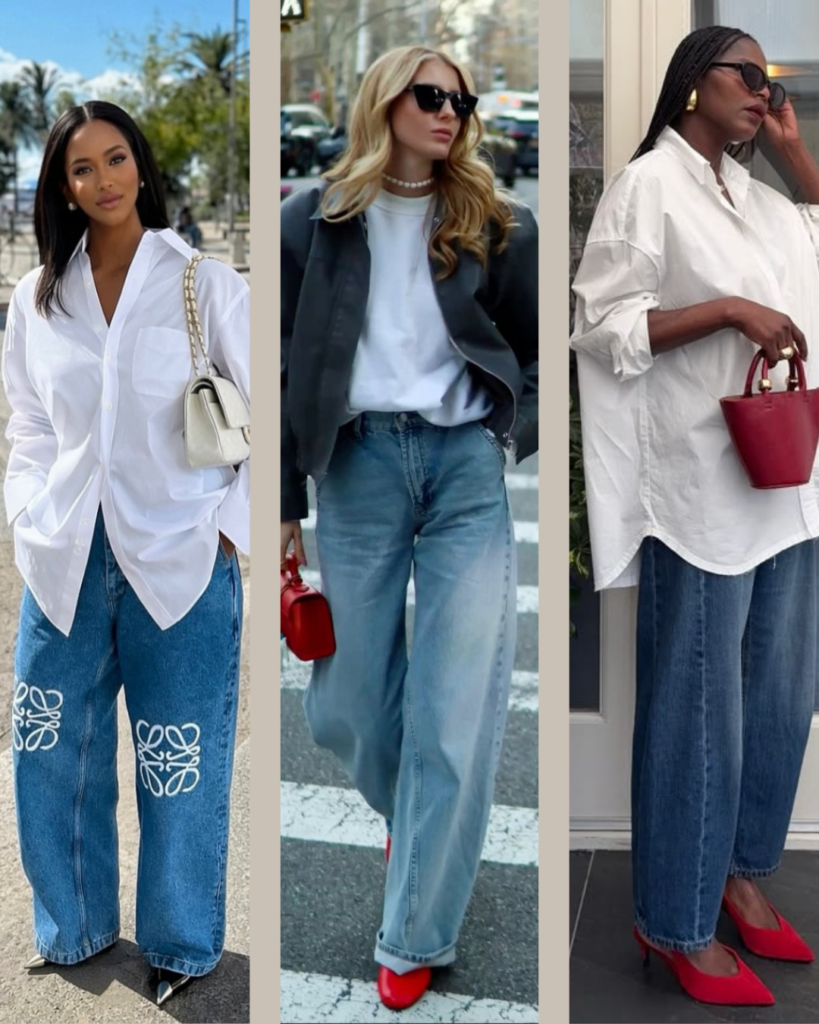
Wide-leg jeans are everywhere right now. Barrel jeans. Ultra-cropped. Super-low rise. Trends are fun, but if a silhouette has never worked on your frame before, no amount of trend authority will change that. The most stylish people wear what suits them — not what’s on the moodboard.
Fix it. Find your “forever cut” — the shape that always works for you — and let trends play a supporting role, not the lead.
6. Longevity: Overlooking the Rise
The rise, the distance from the crotch seam to the waistband, may be the most important measurement in jeans. If the rise is too low, the jeans slip, there is a gap at the back, and demand constant adjustment. If it’s too high, they can feel restrictive or throw off the visual proportions of your torso. Many people default to “mid-rise” without a second thought, but experimenting with different rises can make a big difference.
Fix it. High-rise elongates legs and works brilliantly tucked in. Mid-rise is versatile. Low-rise is unforgiving and best worn intentionally.
7. Value: Equating Price With Quality
Paying £200 for a pair of jeans from a luxury brand doesn’t guarantee better quality than spending £60 on a pair from a specialist denim label. What truly counts is construction quality, selvedge finishing, dye methods, and hardware durability—not the logo on the back pocket. On the other hand, extremely low prices often mean you’ll get weak seams and poor integrity.
Fix it. Inspect the seams, check the zip mechanism, and research the brand’s denim sourcing before spending big — or going cheap.
8. Fit: Skipping the Tailor
Manufacturers design off-the-rack jeans to fit a statistical average, but that average rarely matches anyone’s body perfectly. The inseam is usually too long, the thigh can be too roomy, or the waist just a bit off. Getting a simple hem from a tailor costs little and can turn a good pair of jeans into a great one—yet most people skip this easy upgrade.
Fix it. Budget £10–£20 for a hem when buying jeans. It is the single best improvement money can make to a denim purchase.
9. Care Washing Them Too Often
Denim experts and brands alike agree that you don’t need to wash jeans after every wear. Washing them too often breaks down the fabric, fades the colour, and weakens the fibres. Many suggest washing raw denim only every 3–6 months, spot-cleaning between wears, and letting them air out in between.
Fix it. Wash when genuinely dirty, not just worn. Hang them out to air after wear. Your jeans will last years longer for it.
10. Mindset: Settling for “Fine”
Settling for jeans that aren’t quite right is the silent killer of denim wardrobes everywhere. You know the feeling—grabbing a pair that almost fits and convincing yourself they’ll “do.” But they never do. “Fine” jeans end up unworn because they don’t make you feel good. The confidence you get from a truly well-fitting, well-chosen pair is worth spending an extra half hour in the shop or walking away from a tempting sale.
Fix it. Set a standard. Walk away from “fine.” Own fewer pairs you reach for every time, rather than more that disappoint.
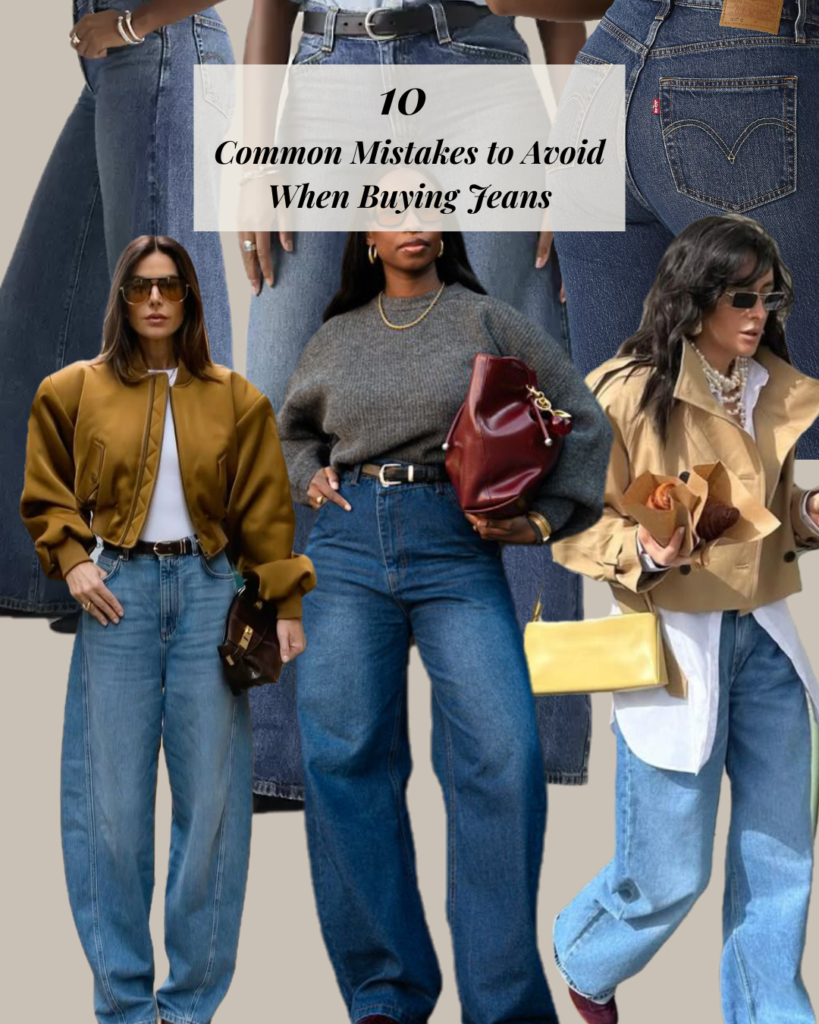
The right pair of jeans exists for everybody and every life. The trick is knowing what to look for — and what to leave on the rail.
Dress With Intention
Fewer, better pieces. Less wardrobe regret. The right jeans change everything.